Team Member Experience · Body of Work
Moments that Matter
The Situation
Rocket had built meaningful ways to bring the ISMs to life — through print artifacts, the ISMs Book, and live events like ISMs Day. But the challenge was bigger than any single medium. The question became: how do team members actually experience these values across every stage of their career?
The work needed to go deeper — from cultural artifacts to a strategic framework for how the ISMs show up in the real moments that shape how people feel about working at Rocket.
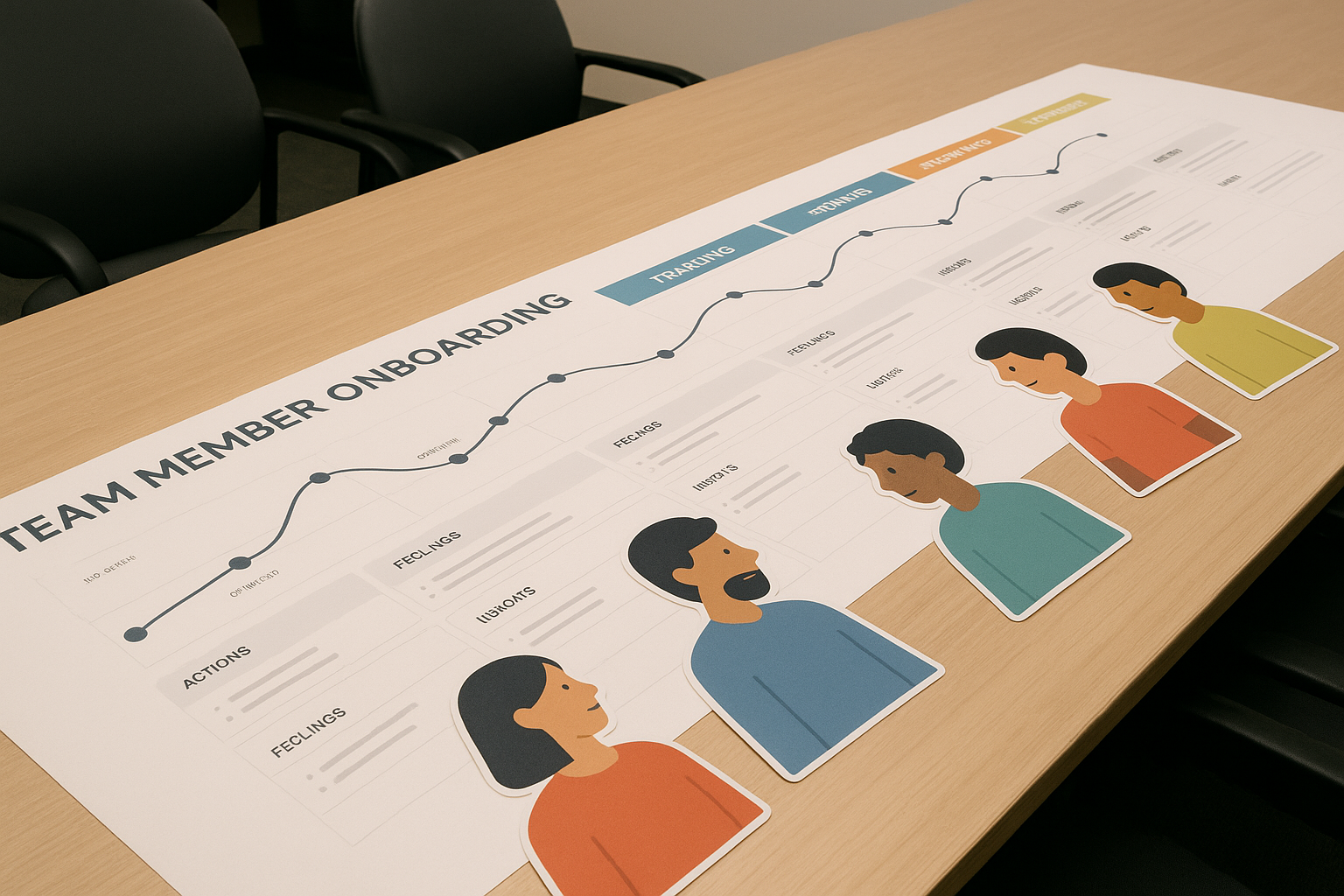
AI prototype of the large-format journey map workshop medium
My Role
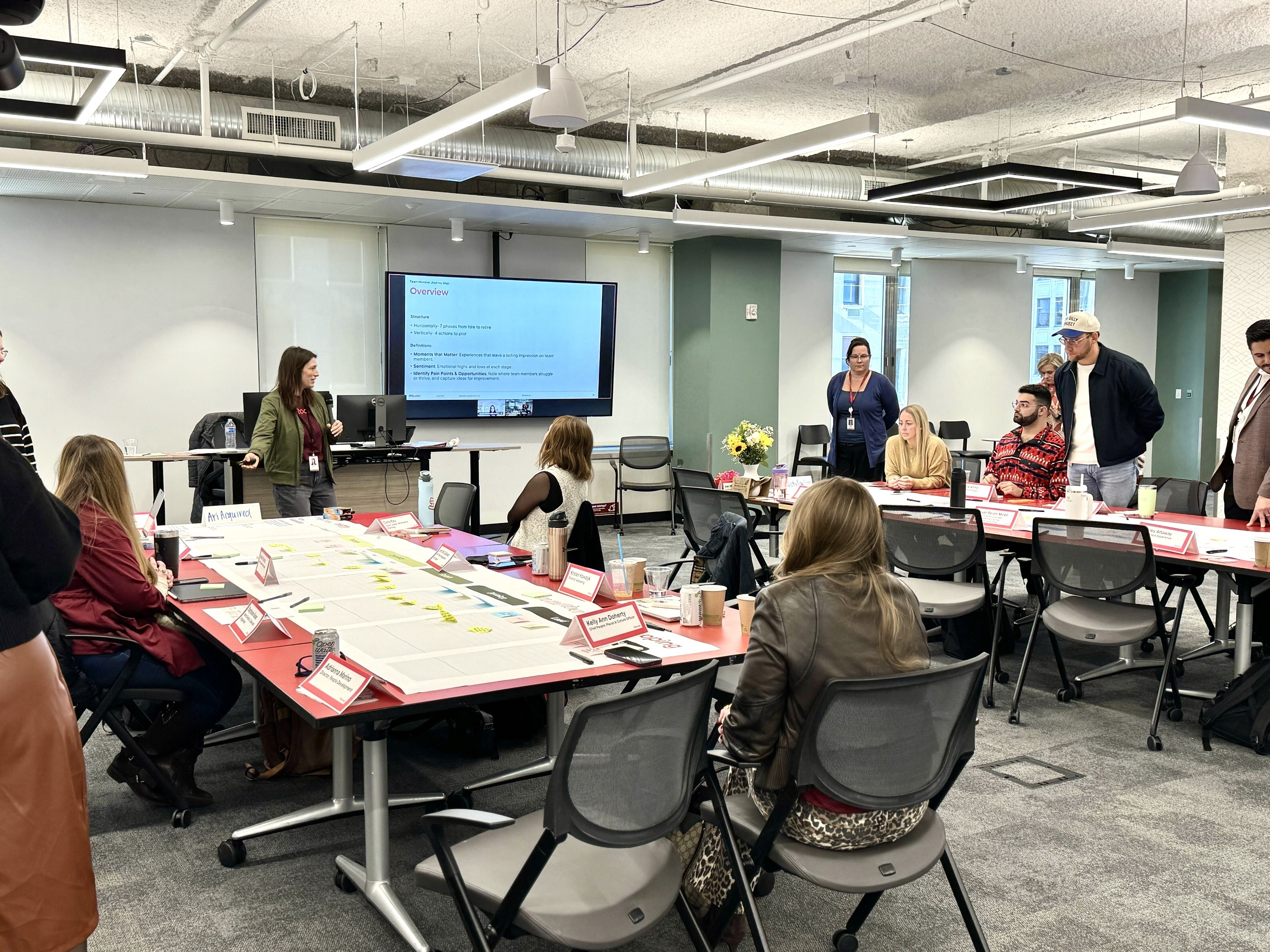
I architected the workshop experience — designing the format, the challenge, and the outputs — and brought together a cross-functional group of ~30 leaders to map the team member experience from the ground up.
Workshop Architecture · Experience Design · Cross-functional Facilitation · Strategic Framing
The Approach
1. Reframe the Challenge
The core insight: companies invest deeply in mapping their client experience — every touchpoint, every moment of friction or delight. We applied that same methodology to the team member experience, treating each stage of the career lifecycle as a design problem worth solving.
2. Assemble the Right Room
Brought together ~30 leaders spanning HR, Marketing, Product, Events, Orientation, Learning and Development, and Leader Coaching. These were the people who actually own the moments in a team member's career — brought together for the first time to see the full team member experience as a connected system, not separate programs.
3. Pre-Work — Jobs-to-Be-Done
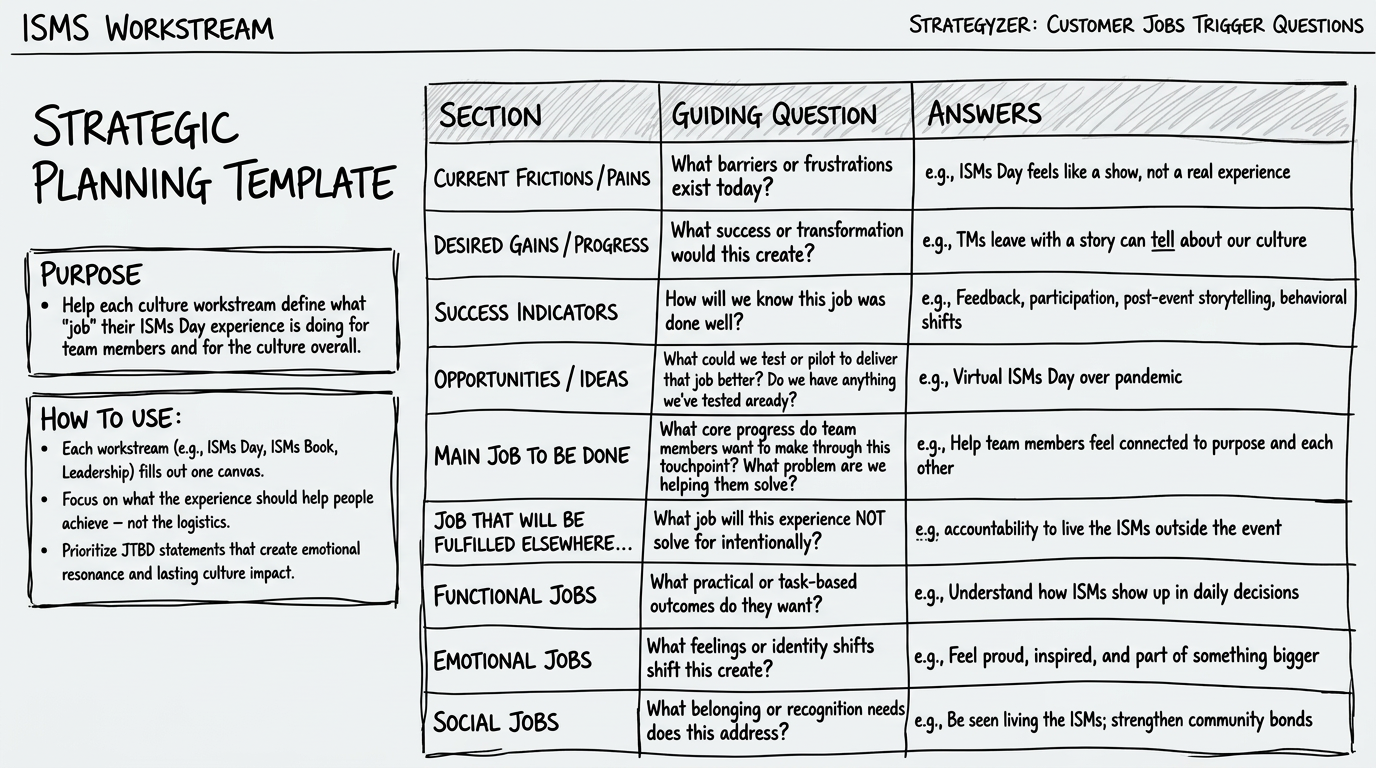
In preparation for the workshop, a Jobs-to-Be-Done strategic planning template was sent to all participants. The framework asked each culture workstream to define what "job" their ISMs experience was doing for team members — moving the conversation from logistics to purpose before anyone entered the room. This primed leaders to think in terms of outcomes, not activities.
4. Map at Scale
Working across three large-format journey maps — each roughly 3 feet by 15 feet — teams mapped three distinct personas reflective of Rocket's evolving workforce, including legacy team members from acquired companies. Each persona included journey map phases for pre-acquisition, recognizing that needs and pain points vary significantly based on where someone is in their journey with the organization. Each map surfaced where the ISMs were being activated, where they were missing, and where the biggest opportunities for intentional design existed.
5. Synthesize and Prioritize
After the session, I went through all three journey maps and selected the top moments across personas. I then built a priority and impact matrix — plotting each moment on high-to-low priority versus high-to-low impact — to define what the focus of this body of work should actually be. The output wasn't a list of everything; it was a clear point of view on where to start.
6. Rebuild the Structure
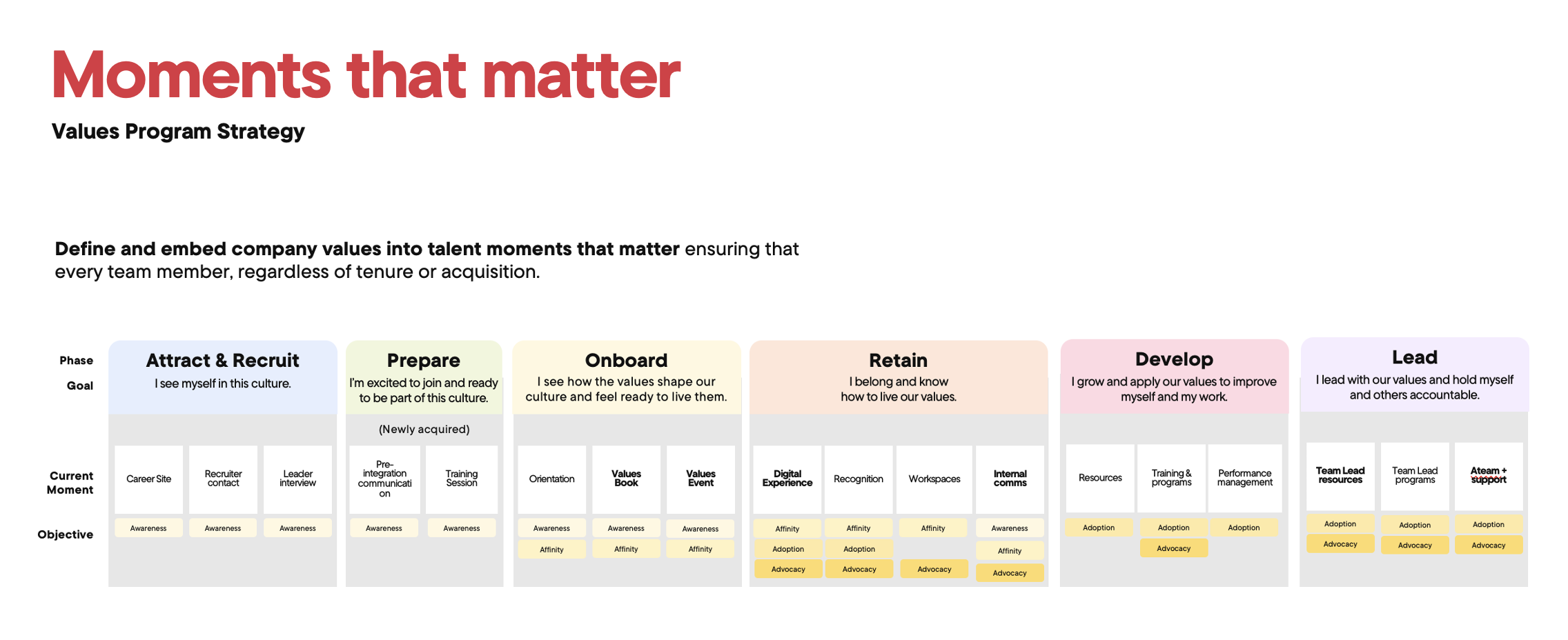
From there, in partnership with a Portfolio Manager, I completely restructured the body of work — providing the structure and strategy to organize work streams by lifecycle stage, with each moment nested within its stage. Holding strategic oversight across the full lifecycle, responsible for the connection and alignment across all phases and the moments within them. Every owner then set KPIs so the activation of the ISMs could be tracked, not just intended.
The Work
- Three persona journey maps — Large-format maps tracing three team member personas through the full career lifecycle
- Digital live journey map — A synthesized, final version built from the session outputs — the working document for ongoing activation
- Priority & impact matrix — Plotted each moment on high-to-low priority vs. high-to-low impact to define what the body of work should focus on first
- Lifecycle work stream structure — Reorganized the full body of work into work streams by lifecycle stage, with each moment nested within its stage
- KPI framework — Each work stream owner set trackable KPIs so the activation of the ISMs could be measured, not just planned
The Impact
For the first time, the teams responsible for different stages of the team member experience saw the full journey together — identifying gaps, overlaps, and missed moments as a shared system rather than separate programs.
The session produced a prioritized activation agenda — with clear focus on the highest-impact moments — and a restructured body of work that every lifecycle owner could operate within. Ongoing strategic alignment ensures each work stream stays connected to the full lifecycle picture.
The ISMs are no longer just something people read or attend. They're now mapped, prioritized, owned, and tracked — across every stage of the team member experience.